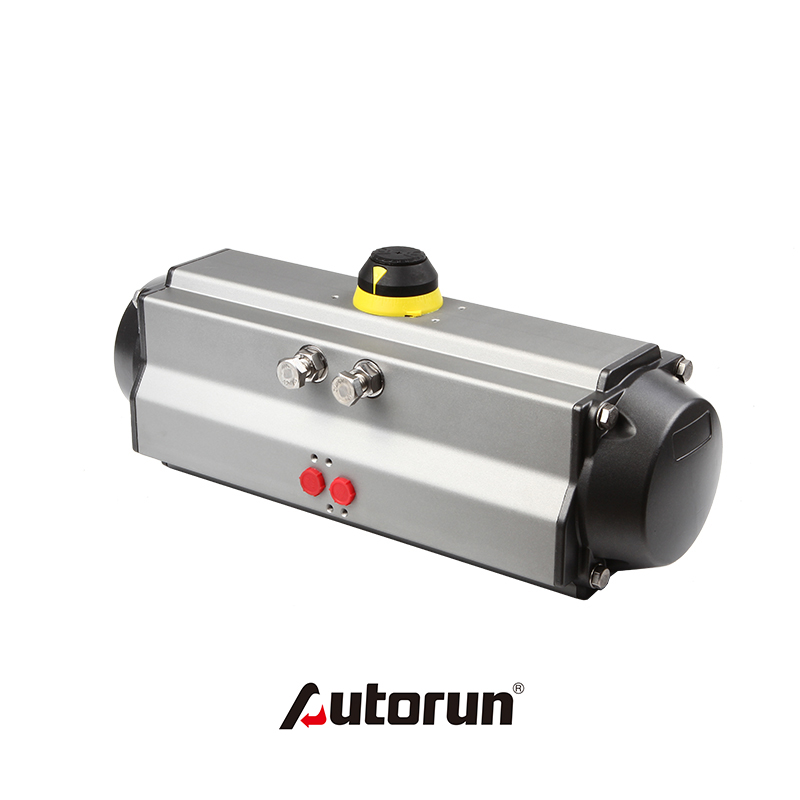
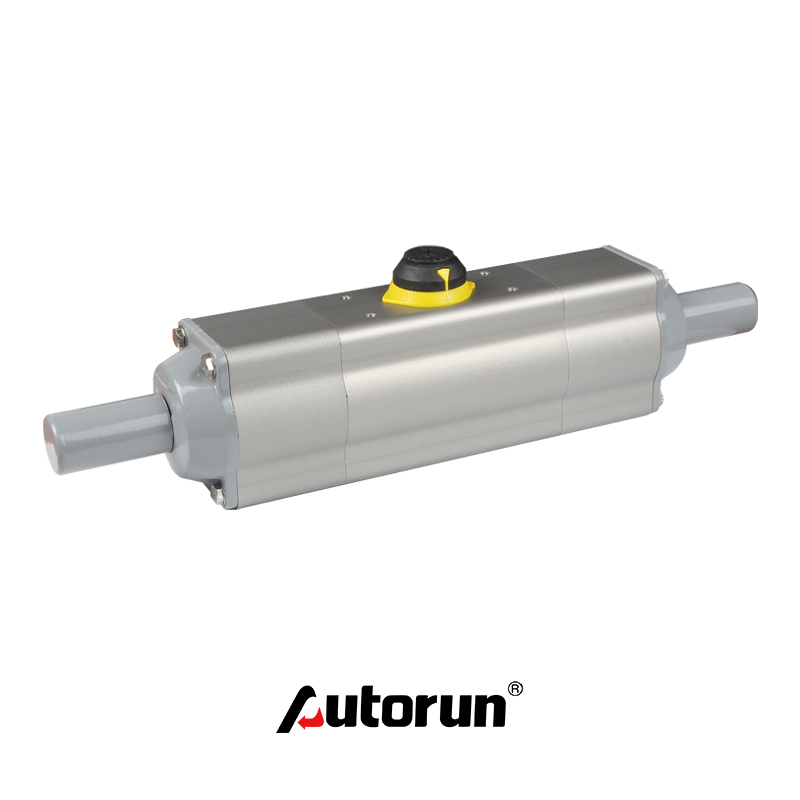
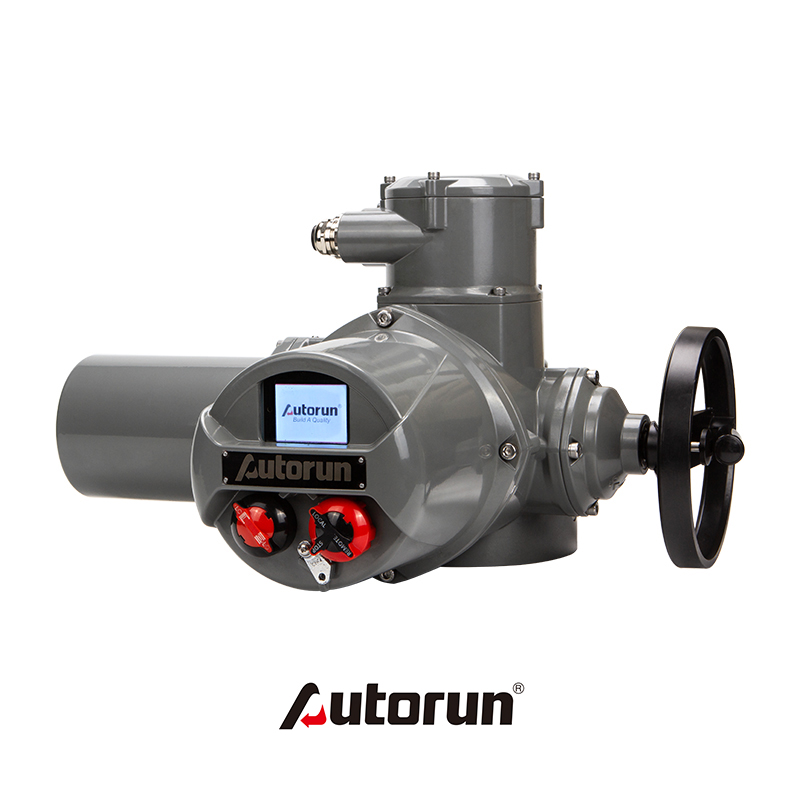
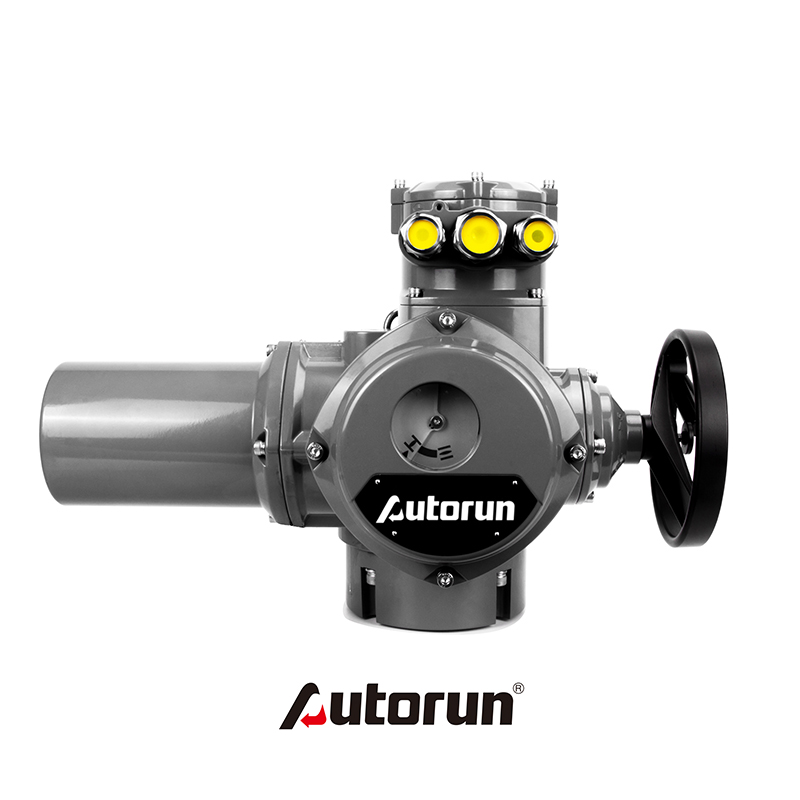
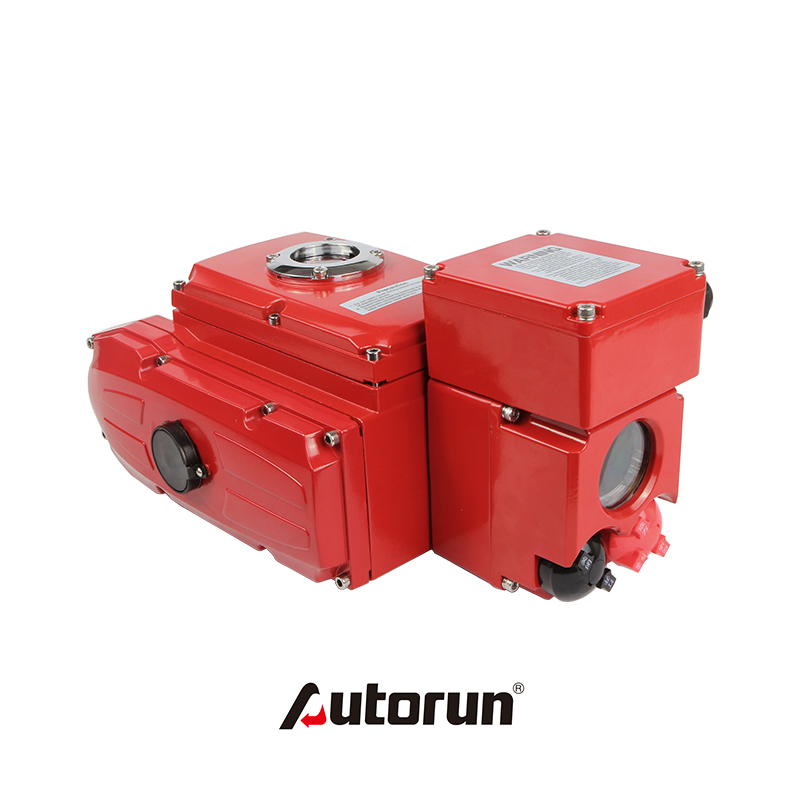
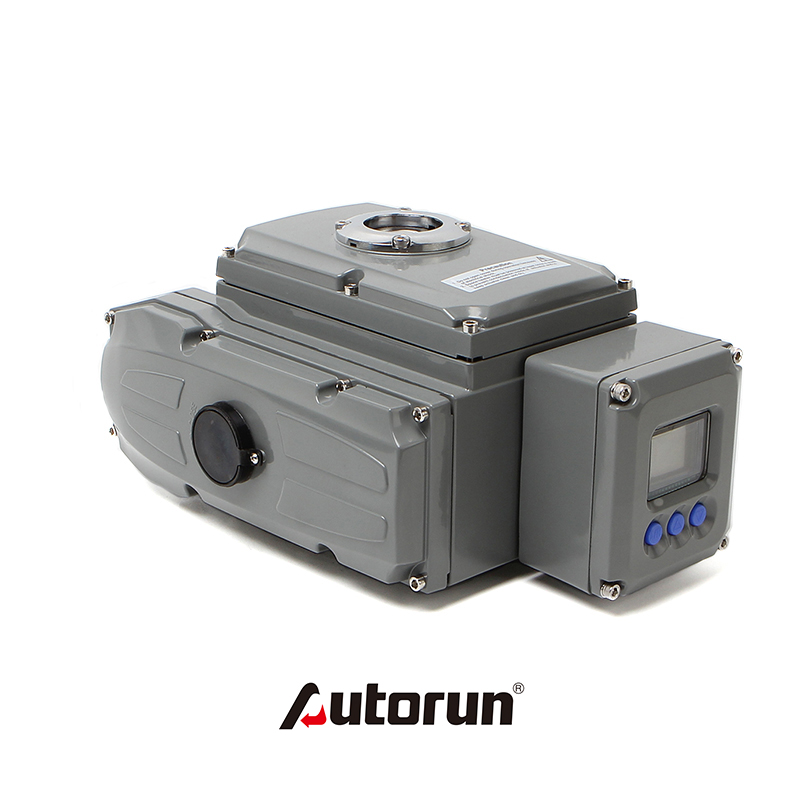
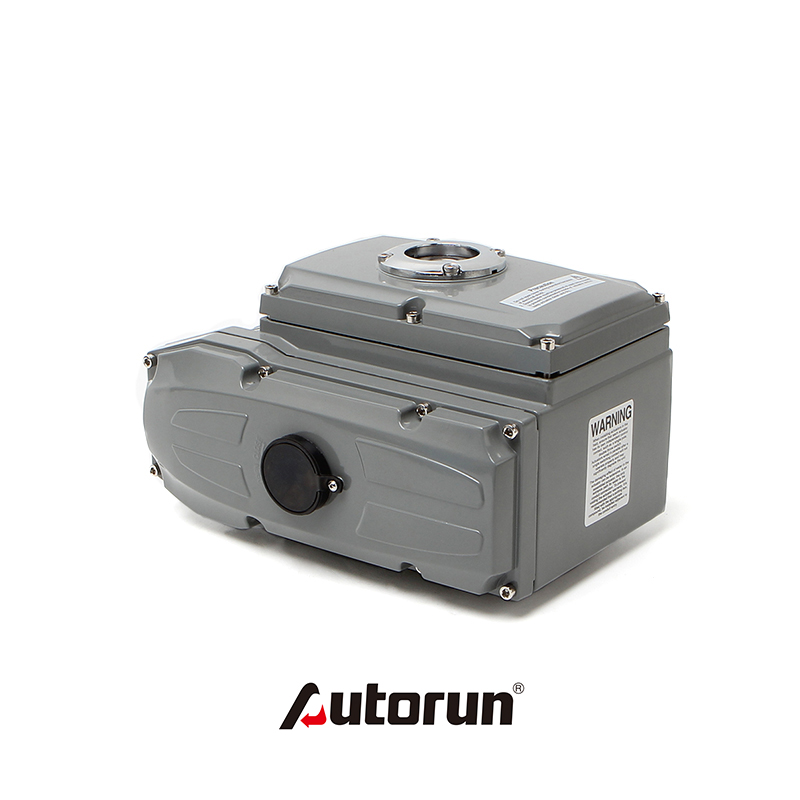
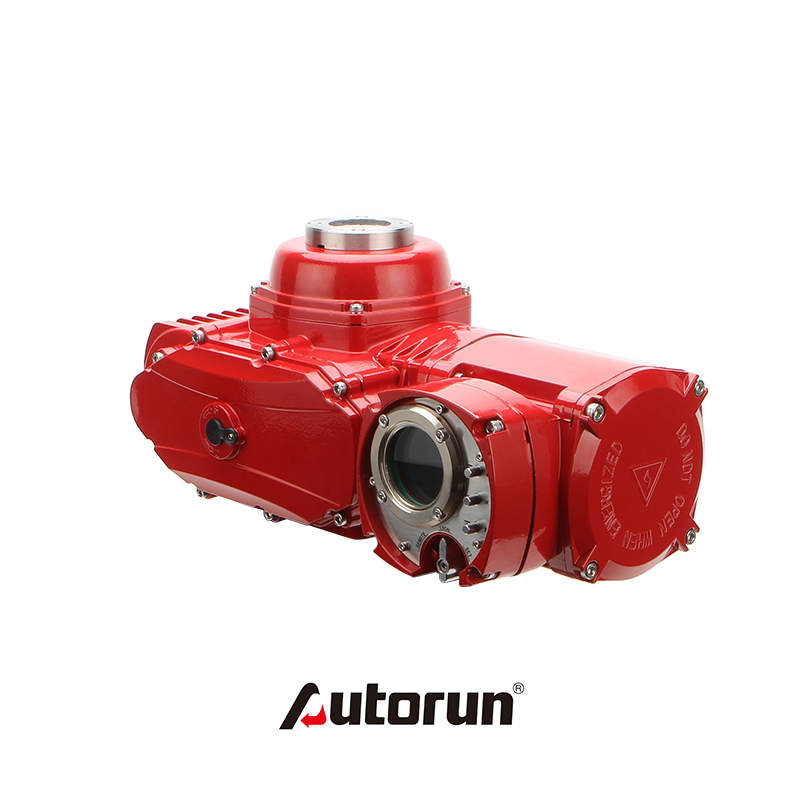
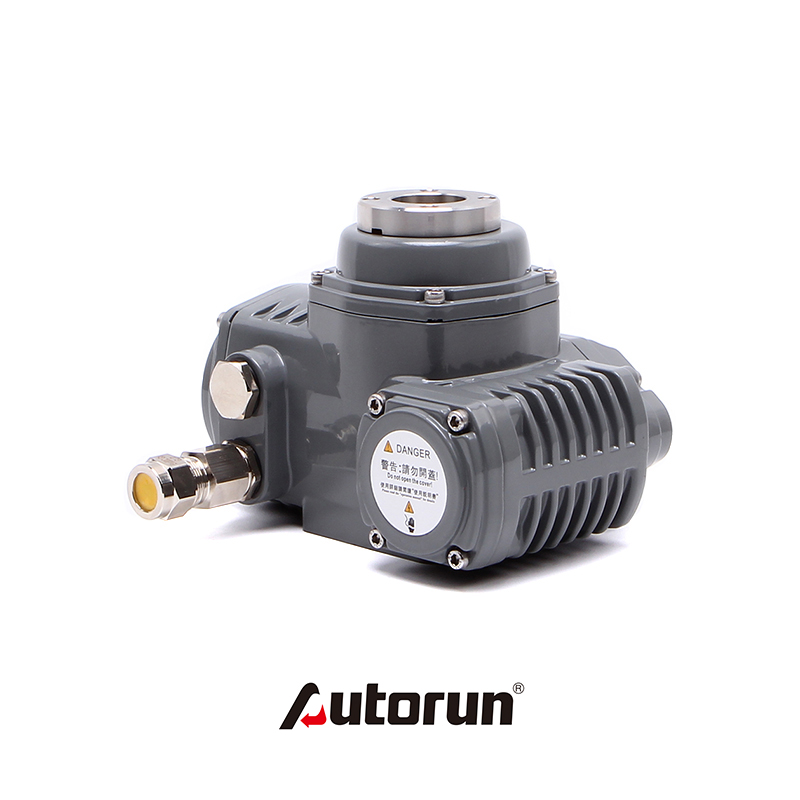
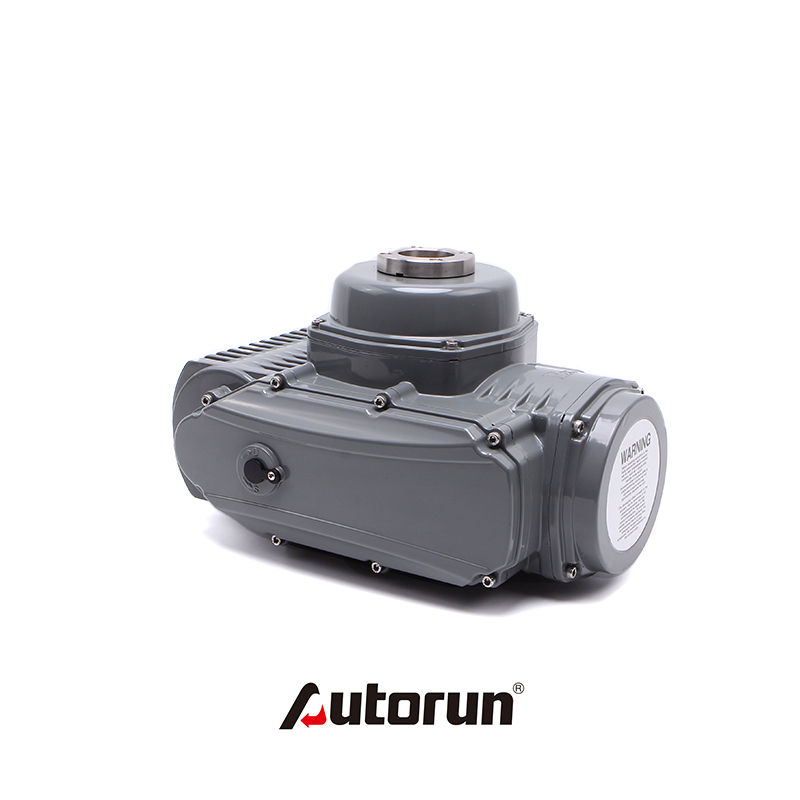
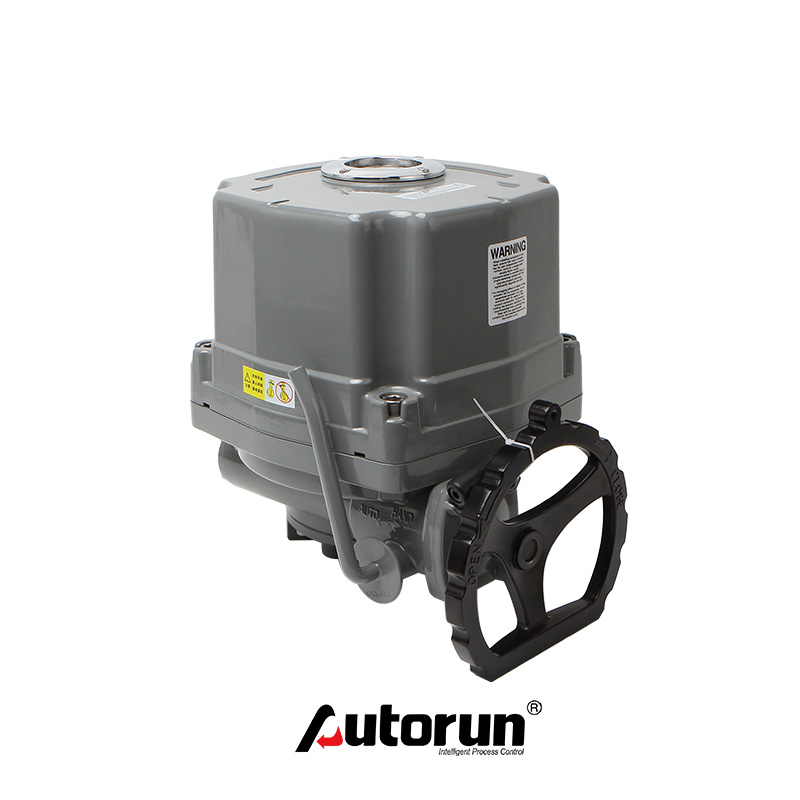
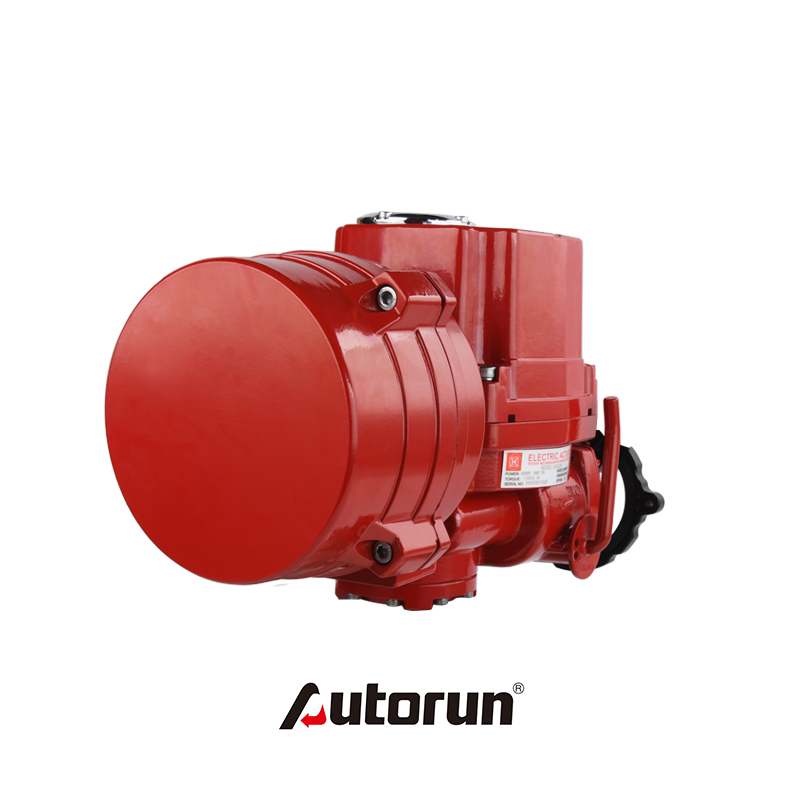
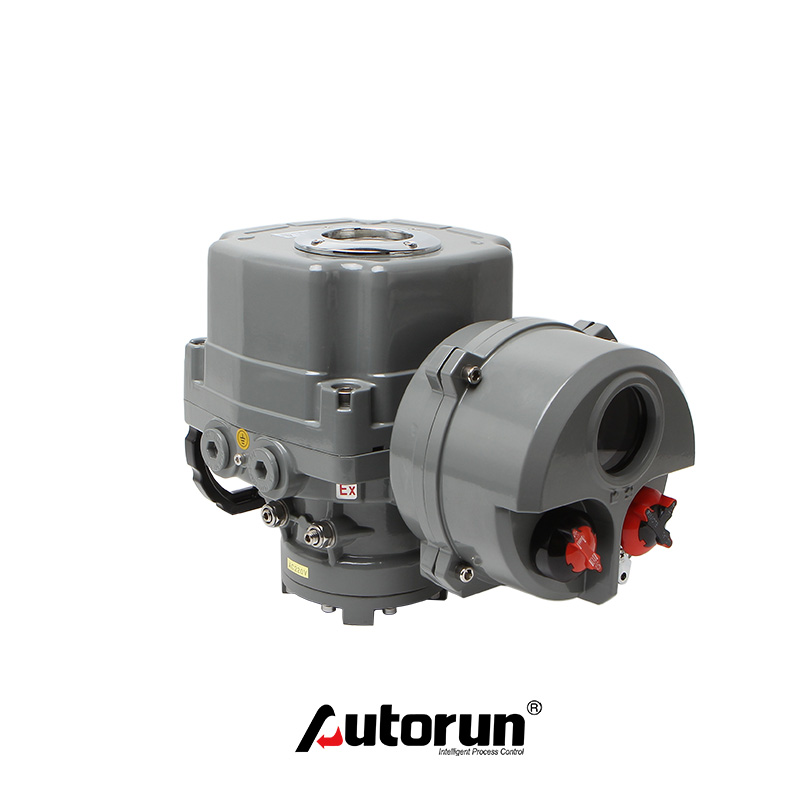
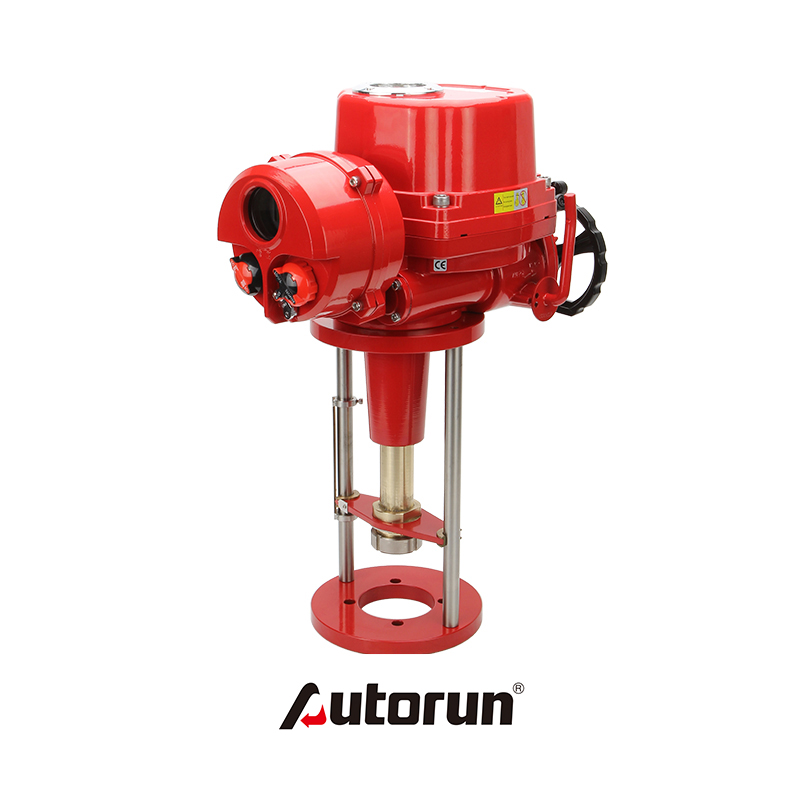
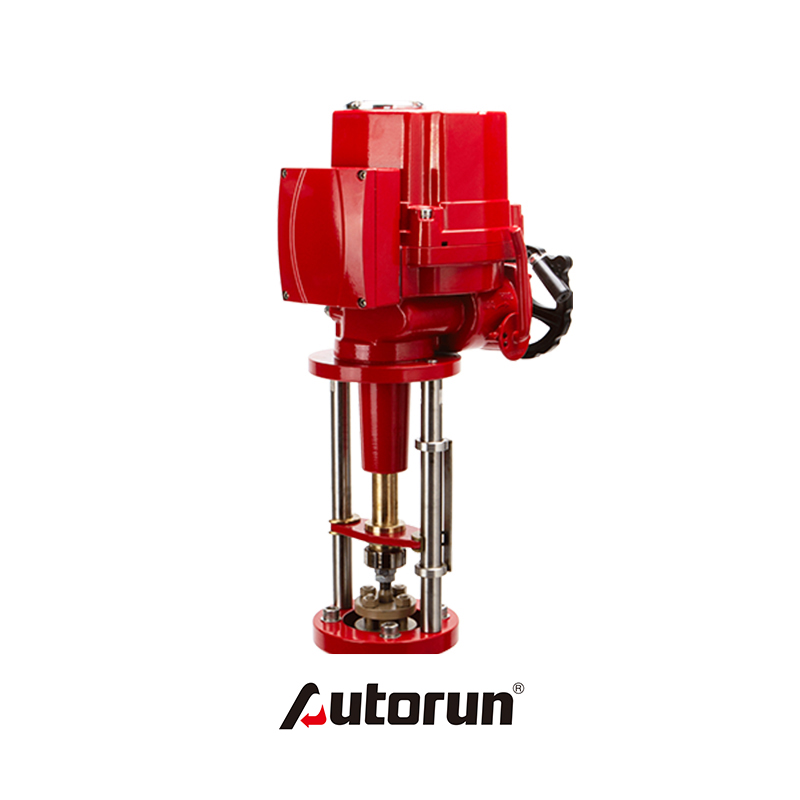
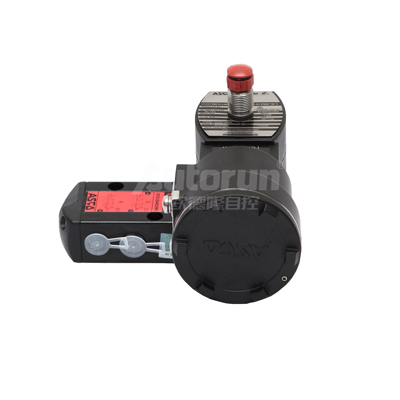
When the intelligent integrated electric actuator is powered off, the electric actuator, that is, the valve controller, will remain in its original state. Some valve controllers will conduct a self-check after re-energizing, which will lead to valve action. Therefore, there are two ways to solve this problem.
First, after the general valve controller power off, let the building control DDC give an opening signal to keep, so that the valve self-check will stop because of the DDC signal.
Secondly, it is a relatively safe way to change the valve controller to manual control and then power on. Usually, the self-checking gear acts and the linkage gear does not act.

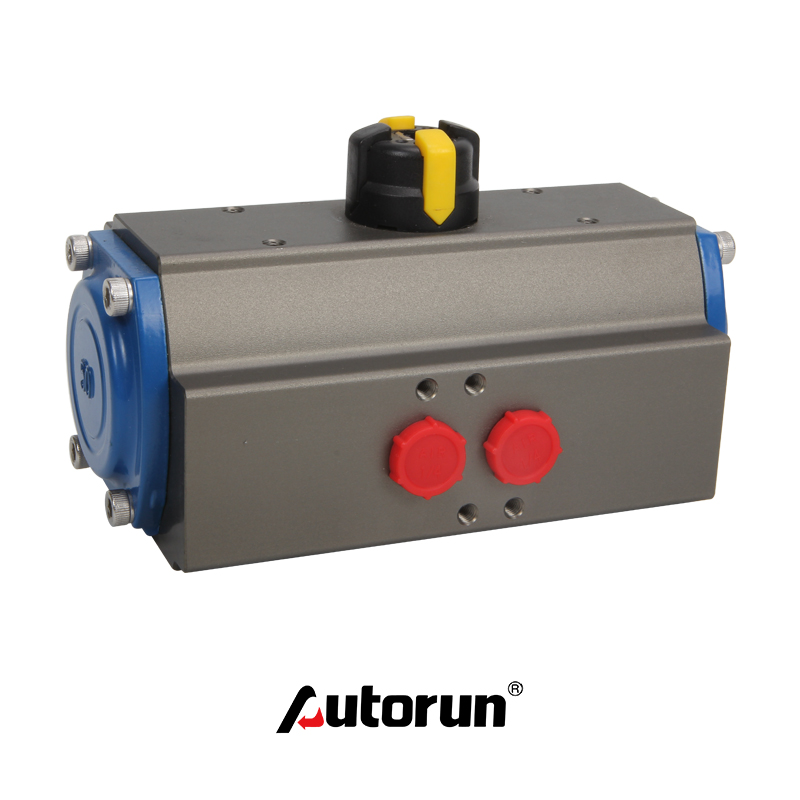
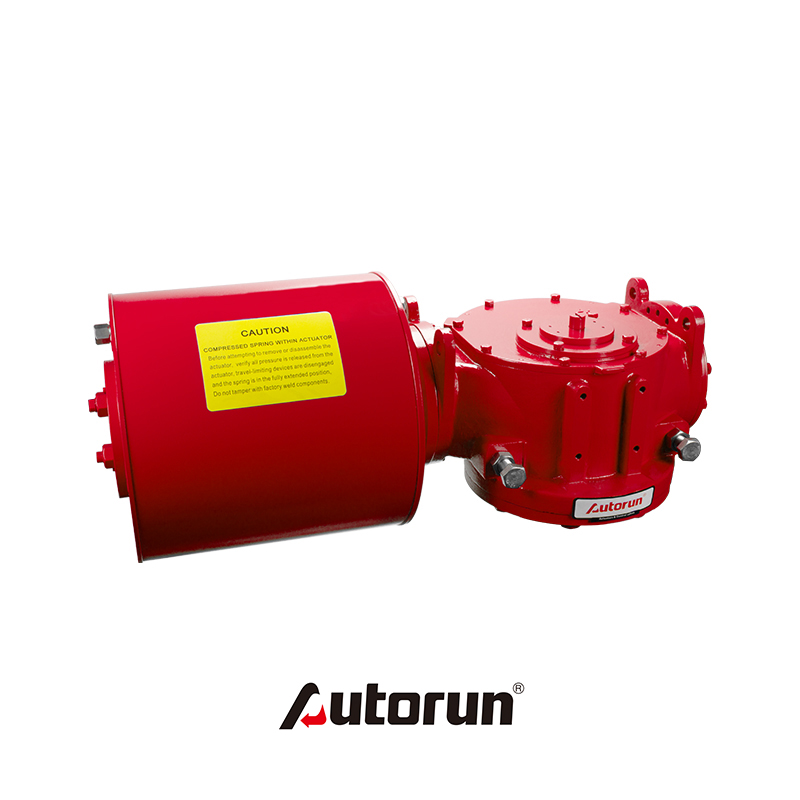
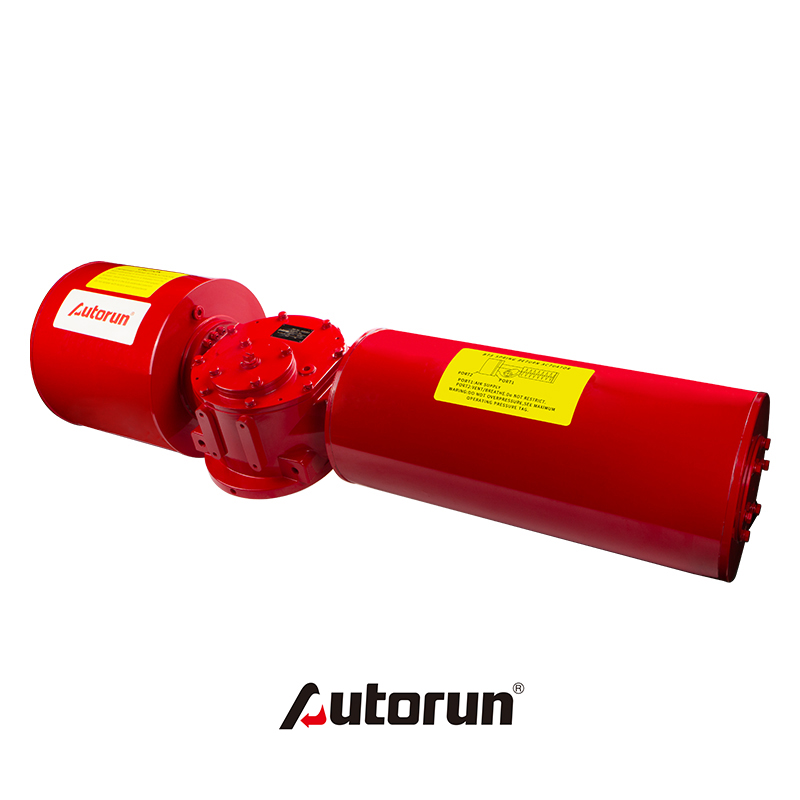
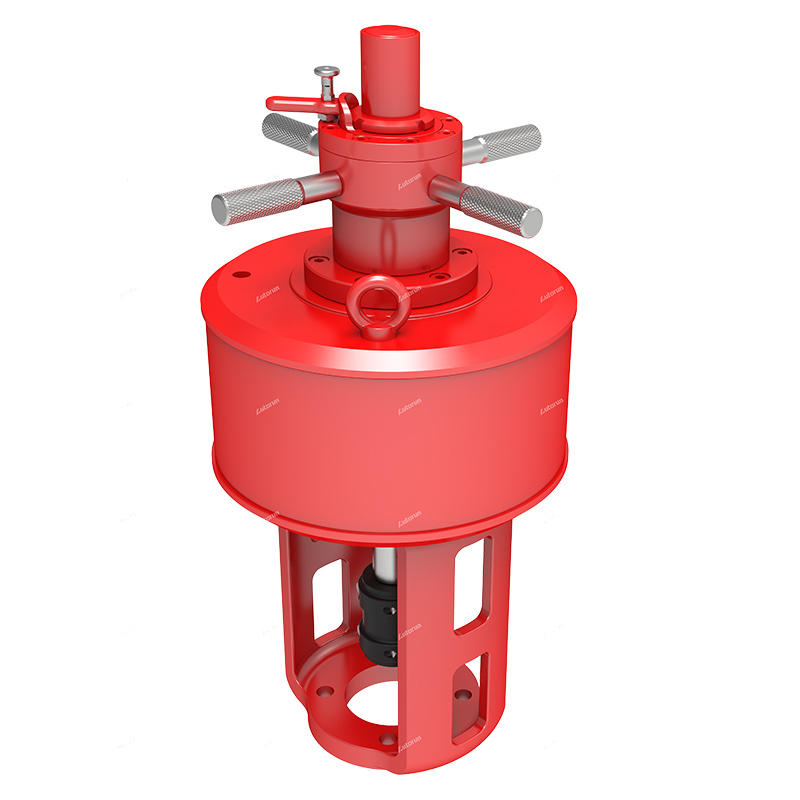
The electric actuator is mainly composed of servo amplifier and actuator. In the middle, the operator can be connected in series. The servo amplifier receives the control signal from the controller and compares it with the feedback signal of the output displacement of the electric actuator. If there is a deviation, the difference will be amplified by power to drive the two-phase servo motor to rotate. Move.
The output shaft is driven to change the rotation angle by decelerating through the reducer. If the difference is positive, the servo motor will rotate positively and the output shaft angle will increase; if the difference is negative, the servo motor will reverse and the output shaft angle will decrease. When the difference is zero, the output contact signal of the servo amplifier stops the motor, and the output shaft is stabilized at the angle corresponding to the input signal. This position feedback structure can make the linear relationship between input current and output displacement better.